China Travel Decisions · Vegetarian Food in China
Vegetarian in China: How to Order Without Meat Broth or Oyster Sauce
A dish with no visible meat can still contain pork mince, bone broth, lard or oyster sauce. The fix is a precise kitchen question, not a generic 'vegetarian' label.
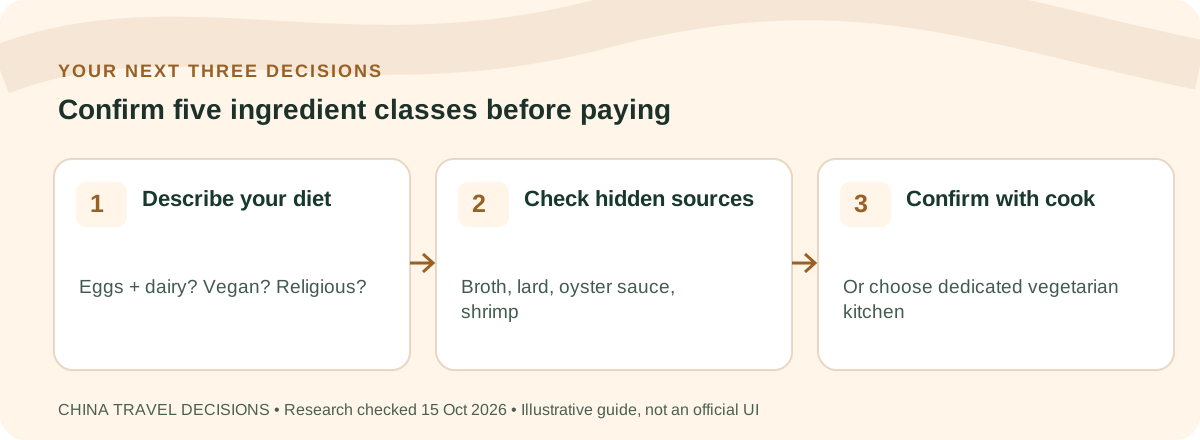
Quick answer: When strict vegetarian visitors eat in mainland China, the practical problem is often hidden animal ingredients in otherwise vegetable-looking dishes: 肉末 (minced meat), 猪油 (lard), 骨汤/肉汤 (bone/meat stock), 蚝油 (oyster sauce), 鱼露 (fish sauce), 虾皮 (dried shrimp). A January 2026 traveler's firsthand question specifically excluded meat even in broth and tiny garnish. In a mixed kitchen, show a precise written Chinese request, ask staff to check with the cook, and choose a genuinely vegetarian kitchen if cross-contact or uncertain ingredients are unacceptable. A menu photo or QR translation alone cannot prove a dish is vegan.
Why a plate of vegetables may not be vegetarian
One strict vegetarian traveler asked how to avoid meat even in broth or small pieces, explaining that the restriction was religious. A second October 14, 2026 China travel discussion mentioned a lack of vegetarian options as a specific annoyance, while a July 2026 visitor asked about traveling through Chongqing, Xi'an, Chengdu, Beijing, Shanghai and Zhangjiajie as a vegetarian.
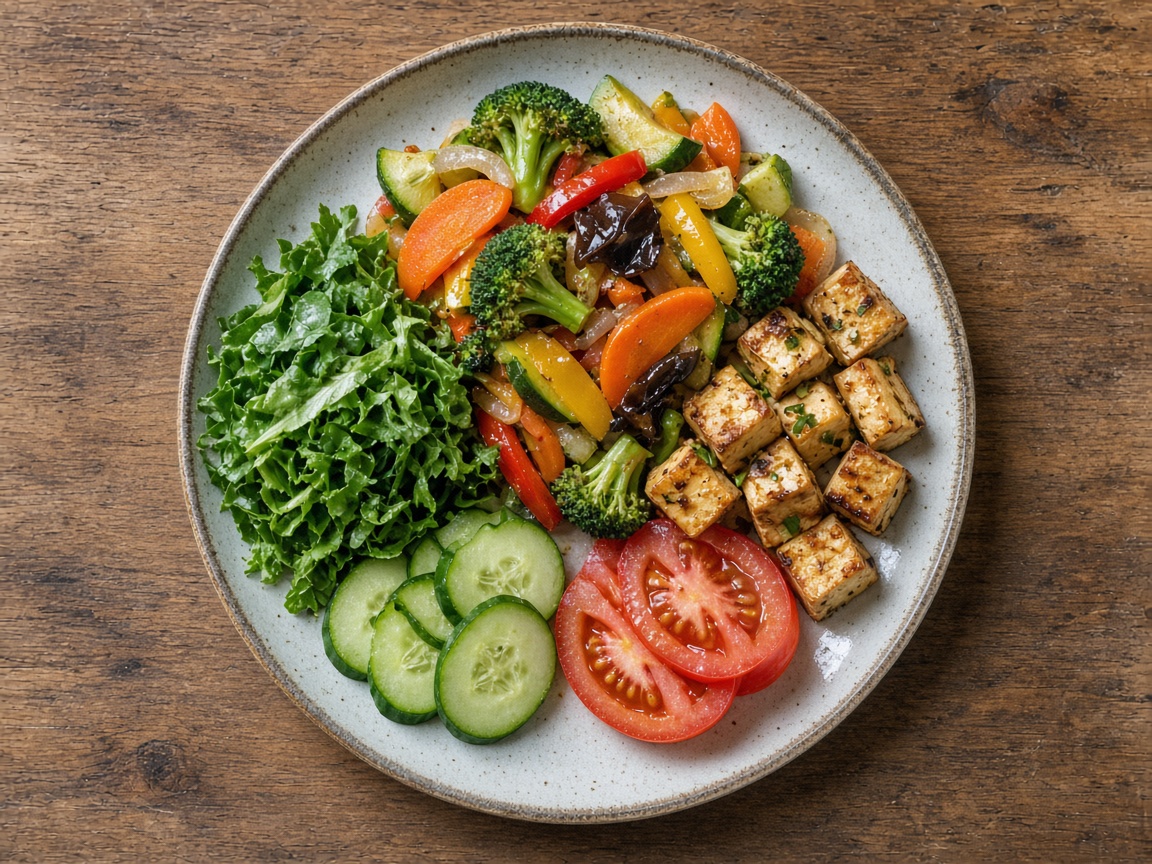
The issue is not that Chinese cuisine has no plant-based food. It is that recipes and restaurant kitchens differ. 麻婆豆腐 (mapo tofu) may include minced pork or beef; 干煸四季豆 (dry-fried green beans) may include pork mince; some apparently green stir-fry dishes can use 蚝油 (oyster sauce). Noodle soups and sauces can use bone stock even when meat isn't visible. The generic phrase “我不吃肉” (“I don't eat meat”) is a helpful start, but it may not communicate all exclusions.
None of these recipes is identical at every restaurant. Rather than declaring a menu item universally unsafe, treat it as a dish-level question to ask before ordering.
Copy this Chinese card for a strict vegetarian meal
Strict vegetarian: eggs and dairy are allowed
您好,我吃素。由于宗教/个人饮食原因,我不吃猪肉、牛肉、鸡肉、鱼或任何海鲜,也不能吃肉末、肉汤、骨汤、猪油、蚝油、鱼露、虾皮等动物性调料。鸡蛋和牛奶可以。如果有这些配料,请不要做给我,能请厨师确认吗?谢谢!
Hello. I'm vegetarian for religious/personal dietary reasons. I eat no pork, beef, chicken, fish or seafood, including minced meat, meat/bone stock, lard, oyster sauce, fish sauce or dried shrimp. Eggs and dairy are okay. Please ask the kitchen to confirm; if these ingredients are used, please tell me rather than serving the dish.
Customize the reason—“宗教原因” is religious, “个人饮食原因” is personal dietary reasons—and remove ingredients you do allow. The kitchen may still be unable to guarantee a separate preparation area. If you have an actual allergy, use explicit allergy wording and allergy-specific precautions; a preference card cannot communicate potentially life-threatening exposure.
For vegan travelers, eggs and dairy must also be excluded
Vegan: exclude all animal ingredients
您好,我吃纯素,不吃肉、鱼、海鲜、蛋、奶,也不吃骨汤、肉汤、猪油、牛油、蚝油、鱼露、虾皮等动物性配料。请不要用动物油烹饪,麻烦帮我问一下厨师是否能做完全不含动物成分的菜。如果不能确认,请直接告诉我,谢谢!
I eat fully plant-based food: no meat, fish, seafood, eggs or dairy, and no meat stock, bone broth, lard, beef fat, oyster sauce, fish sauce or dried shrimp. Please ask the cook; if the dish cannot be confirmed free of animal ingredients, please tell me.
A dedicated 全素 or 纯素 restaurant may simplify the conversation, but don't assume that every place calling itself 素食 (“vegetarian”) excludes egg, dairy, honey or shared cookware. Some Chinese temple-style vegetarian menus include imitation meats made from wheat gluten, mushrooms and soy; they are not suitable for every person with gluten, soy or sesame allergies.
If your diet excludes onions, garlic or the “five pungent vegetables” for Buddhist practice, mention those separately. General vegetarian language does not automatically communicate those restrictions.
How to find reliable places without guessing a brand or address
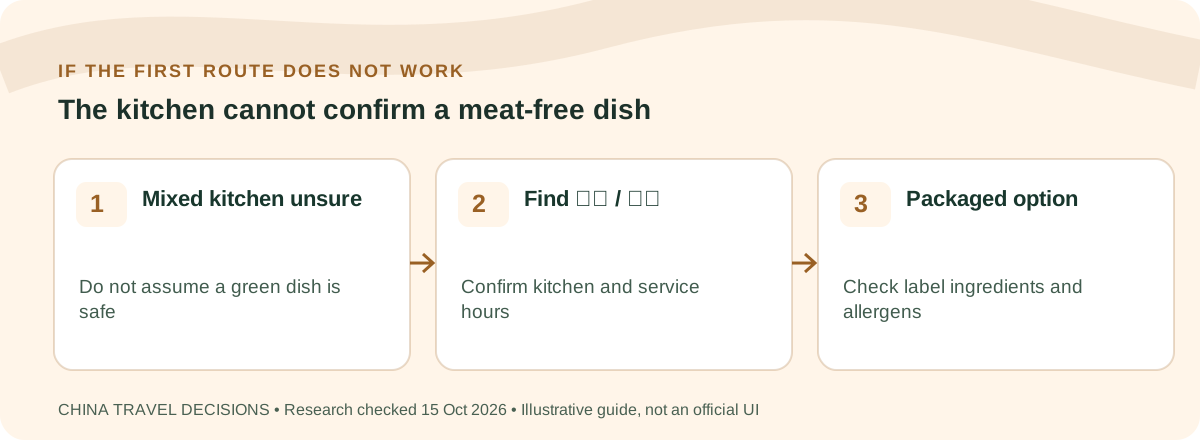
Search maps and review apps using 素食 (vegetarian food), 素食餐厅 (vegetarian restaurant), 纯素 (vegan) or 斋菜 (Buddhist-style vegetarian). In Chinese-language Meituan, Dianping or Amap results, cross-check reviews with photographs of the current menu and confirm that the establishment is actually open before traveling across town.
Beijing's official English visitors' guide published in March 2026 identifies vegetarian dining among the options in Wudaoying Hutong; a different municipal dining guide names a vegan-focused restaurant among Friendship Store-area venues. This verifies that dedicated options exist, not their current kitchen practice or live opening hours.
In smaller destinations, a reputable hotel kitchen or supermarket with ingredient labels may be more predictable than asking an unknown snack stand to improvise vegan stock. Pack snacks for long train days. Do not infer that a restaurant is vegetarian because it is halal: halal meat and vegetarian food are different categories.
Order in a QR-code restaurant without losing the ingredient request
A QR-code menu usually displays photos, prices and customizations but cannot guarantee that a hidden stock or sauce will be visible in English. Before submitting payment, call a staff member or use the Chinese card and ask them to check directly with the cook. For a place where the only ordering channel is a mini-program, request staff-assisted ordering if your overseas app or card does not work. Our QR-menu payment guide addresses the separate transaction problem.
Do not rely on auto-translation of “oyster” as “mushroom” or assume a tofu category is plant-based. Read the actual ingredient warnings, ask whether cooking oil and broth are suitable, and order a simpler dish if the kitchen seems unsure. For a child, an elderly traveler or someone on a specific religious diet, an unverified mixed broth is a stronger reason to switch kitchens than to argue over a vague menu symbol.
If a staff member says they cannot confirm a suitable meal, thank them and choose a dedicated restaurant or labeled packaged food. A prepared answer of “yes, vegetarian” does not substitute for agreement on the ingredients you specifically excluded.
Frequently asked questions
Is mapo tofu vegetarian in China?
Not by default. Many recipes include minced pork or beef; some restaurants will make a genuinely meat-free version on request. Check the stock, oil and sauces as well.
Does saying 我吃素 guarantee no oyster sauce?
No. It is a helpful indication that you eat vegetarian food, but the safer approach is to name excluded stocks, animal fats and seafood condiments explicitly.
Are vegetarian Buddhist restaurants always vegan?
Not universally. Ask about eggs, dairy, honey, pungent vegetables and cooking practices according to your exact requirements.
Can a written Chinese request guarantee allergy safety?
No. Dietary preference checks are not a substitute for allergy-specific communication, ingredient review and cross-contact precautions.
Rules and ticket product availability can change. CTD is an independent travel resource, not a government office, a railway operator or a ticket seller. Check the linked official channel before paying, entering China or relying on a reservation.